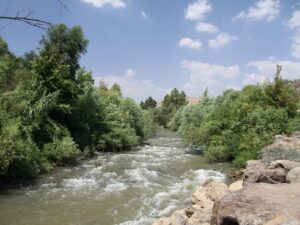
The Gospel of John takes care for geography in a way the other Gospels sometimes don’t, and in the first chapter the Evangelist notes precisely where John the Baptist was at work: “in Bethany across the Jordan” (John 1:28). That detail points to a site on the eastern bank of the Jordan River in modern Jordan, known in Arabic as Al-Maghtas, which the Vatican recognizes as the authentic location of Jesus’ baptism. UNESCO designated it a World Heritage Site in 2015. Archaeological excavations have found churches, baptismal pools, monk cells, and cisterns here dating to the Byzantine period, evidence that Christians have been gathering at this spot to commemorate the Lord’s baptism since at least the 4th century.
The Gospel account of the baptism itself is brief and completely arresting. John baptized Jesus in the river, and the heavens opened. The Spirit descended like a dove and a voice from heaven said, “This is my beloved Son, with whom I am well pleased” (Matthew 3:16-17). The Father, the Son, and the Holy Spirit, all present at a riverbank. This is the moment that inaugurates the public ministry of Jesus, and it happened at the edge of this water.
Pilgrims on this journey have the opportunity to renew their own baptismal vows at Bethany Beyond the Jordan, standing at the river where Jesus stood.